Five Books I’d Love to See Adapted for Television

I’m sure many people who follow me on Twitter or heard one of my podcast appearances for Nerds Against the World know I rant and rave about how much I love Brian K. Vaughan comics and Urban Fantasy books.

Here are my top five suggestions for series that would make great adaptations for TV.
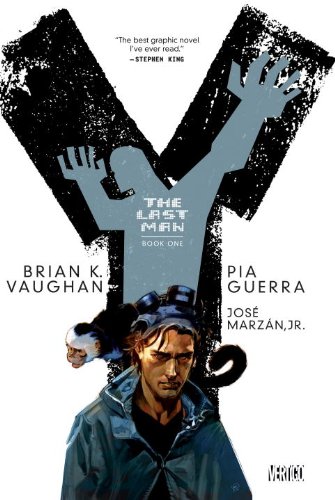
BOOK cover Y The Last man

Y: The Last Man is a dystopian sci-fi adventure created by Brian K. Vaughan and Pia Guerra. The sudden death of almost all male mammals spins the world into chaos. The protagonist, Yorrick Brown, finds himself as the lone male human survivor along with his male Capuchin monkey, Ampersand.

It’s apparent throughout the series that BKV put so much thought into what life would be like if we suddenly lost the entire male population. Important jobs fields dominated by male employees suddenly come to a screeching halt, and every woman is coping in her own way. Yorrick doesn’t give you the male stereotype who would be happy to repopulate with any eager women he meets, but instead wants nothing more than to travel across the world to find his girlfriend, Beth.

At once time this was set to be a movie, which became stuck in development hell somewhere. The rights to the story have reverted back to Vaughan, and it’s unlikely if we’ll ever see any adaptations of this amazing story. However, I feel this would be better suited as an ongoing series. There’s way too many story-lines and unique characters that intertwine with Yorrick’s journey and those would most likely get snubbed out with a film adaptation.
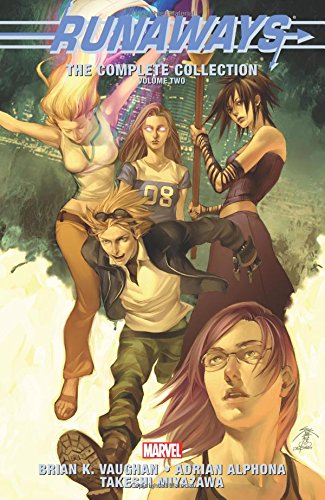
BOOK cover Runaways

Runaways comic book series is another fantastic Brian K. Vaughan comic book creation. BKV and Adrian Alphona deliver a fantastic tale of teenagers who find out their parents are members of an evil crime organization known as “The Pride”. The Pride consists of mob bosses, time travelers, wizards, mad scientists, aliens and telepathic mutants.  Some of the kids use the weapons or gadgets created by their parents and others inherit their own super abilities which are used to try and stop their evil parents.

The kids come together like a dysfunctional family much like you would see in a Joss Whedon show. In fact, Whedon wrote for the series after BKV departed from the second volume. The teenage team even has some pretty memorable moments with other members of the Marvel universe, including Wolverine. This would add to the many great Marvel television shows currently in production and offer life as a superhero from a teenage perspective.
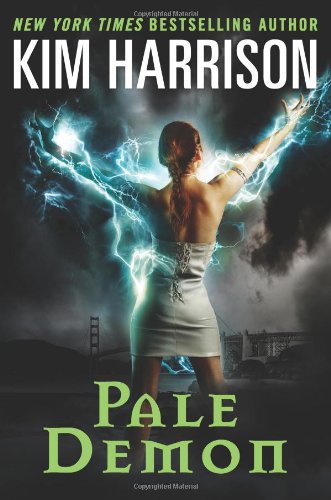
BOOK cover Hollows

The Hollows/Rachel Morgan series by Kim Harrison would also make a good urban fantasy world for a television series.  Harrison’s alternate Chicago setting offers an interesting aspect of how the supernatural world gets outed to the humans and the history of a genetically altered tomato that wipes out a huge chunk of the human population. It’s quite funny to see humans so afraid to eat ketchup.

The series follows bounty hunter witch, Rachel Morgan, who has the unfortunate luck of finding trouble around every corner. Her roommates and bounty hunter/detective team include the odd pairing with a pixie and living vampire. Fans of Being Human might like this as a show because it’s another interesting pairing of supernatural roommates trying to make their job and living situation work, all while Rachel Morgan becomes the target of many supernatural communities.
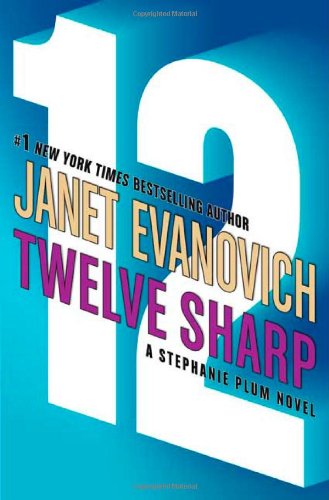
BOOK cover Janet Evanovich

The Stephanie Plum series by Janet Evanovich could still be considered for a television show. The first book, One for the Money, was adapted into a completely underwhelming movie. This is one of the funniest series I’ve ever read, and the show has so much charm and wit that managed to be drained from the film version. The Mortal Instruments series would’ve made this list even after the poor movie, but now the television show reboot is in the works. Why not give the same treatment to the Plum series?

Stephanie Plum is a fun and quirky bounty hunter who finds herself in the most ridiculous situations while trying to capture fugitives. Stephanie surrounds herself with a wild cast of characters including her partner, Lula, who is a former hooker turned wanna-be bounty hunter. Sandra Bullock has long been a fan favorite for the role of Stephanie, so can someone call Bullock and convince her to do television? Please?
BOOK cover Anita Blake

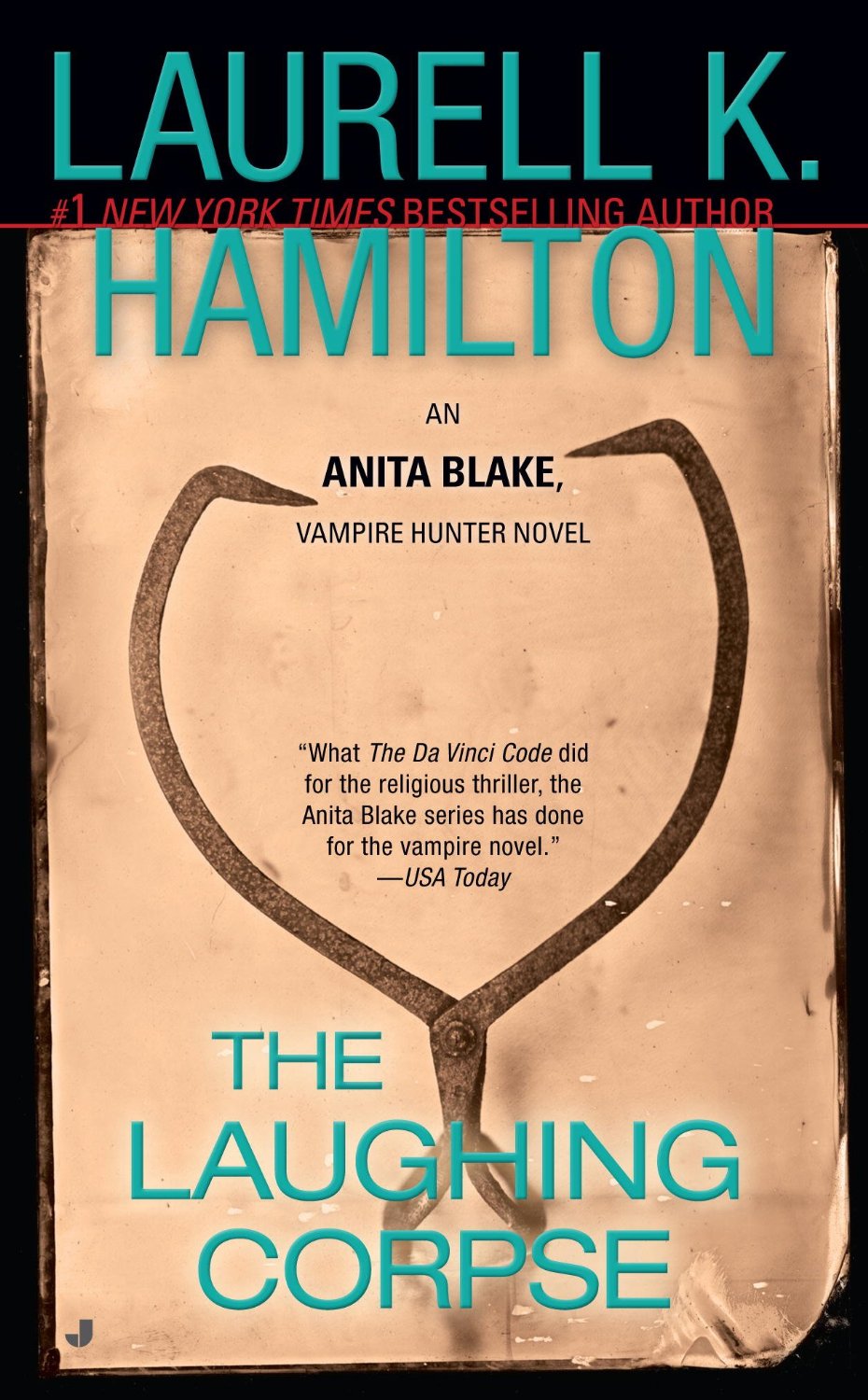
The Anita Blake series by Laurell K. Hamilton is a gritty urban fantasy series which seems best suited as a Netflix original or HBO type show due to the amount of violence and sex. Anita Blake boasts many talents including necromancy, professional vampire executioner and acts as a supernatural consultant for the police in St Louis, Missouri. Supernatural creatures and elements coexist with humans in Anita Blake’s world, and she develops strong relationships with many different factions. The books usually follow Anita as she uncovers mysteries in the supernatural community while getting tangled up in politics and complex relationships with vampires and shifters.

What adaptations would you like to see on television? I’ll cover my top five books that should be movies in next week’s post.

Write Tip: Five Tips for Writing Sequels.

My goal for 2015 has been to re-launch the Alliance series, and I wanted to discuss what I’ve learned while writing for a series. Some of this information will be a repeat of topics previous discussed, but hopefully will be helpful to writers starting a series.

Tip one: Document details to keep track of your continuity. This should be your mentality from day one of book one. I actually make a pretty good effort to keep documents for each WIP to record important facts, date and time sensitive information, and character bios. There are unfortunate occasions where I get caught up in the flow of writing and forget to record something, but I usually keep that Word document open and ready.

This also means you need to keep editing your information during the revision process. If you change your character’s eye color in a later draft, you’re going to make more work for yourself if you forget to document that change. By the time you begin the next book in the series, you should have a great source of information to prevent you from having to constantly scan an entire manuscript for little details. I like to have my info documents opened and ready before I even begin writing a sequel.

Also remember stick to any rules you create. As I mentioned in a previous blog:

If you make a set of rules in your first novel, those rules need to stay consistent in the sequels. Why? Your readers will remember the rules. If you set a rule of magic or law in book one, but then that rule is not kept in book two, your readers will remember and question you. They will lose belief in your story—in the world that you took so long to create.

Tip two: Consider character continuity. You want your character to further develop over the length of the series. The character in the final book can’t be exactly the same as he/she was in book one. Over the course of the series, your character has most likely faced death, experienced loss, or perhaps gained courage on grand adventures. You need to determine how the events of previous books have made an impact on your character while still keeping some resemblance of the original character. If you’re uncertain how your characters might react to certain situations, go back to the basics and get to know your character.

Last week, I discussed a game of 21 Questions to get to know your characters. This might help you get into the minds of each individual character. Ask lots of questions. Learn their fears and personalities.

Tip three: Plan before you write. I know, I know, not everyone is a planner and some call themselves ‘Pantsers’ as they basically just fly by the seat of their pants. I’m in the middle somewhere. I like to plan a basic idea and outline, but let the story flow and change on its own.

Why do I think at least basic planning is important? Because each book in a series needs to have its own story arch, yet all stories need to fit into the continuity of the series.

When I get a new idea and consider as a series, I ask myself basic questions to determine where the story would go. I do this basic outlining process for all of my novels and comic book series. For the Alliance series, I always had an end game in mind. I knew what kind of story I wanted to tell and where I wanted the series to end. So with each book planned, I had to determine what the individual plot would be and how that individual book pushed the characters and overall story towards the final destination.

Tip four: Balancing standalone and sequential. This is the part I’m still learning to balance. Have you ever read a book out of order? On more than one occasion, I’ve purchased and read a book out of order, but was still able to fall in love with the series. The books offered me balance of past information and a strong stand-alone story.

In Drakon, the upcoming sequel to The Alliance: Bloodlines, I had to decide what information was necessary for new readers, but without repeating so much information that I bored readers familiar with Bloodlines. I would recommend using beta readers who are familiar with the series and new readers who aren’t familiar at all.

Tip five: Take cover design into consideration. Plan for cohesion and your genre. I had a rough draft for Drakon before I ever published The Alliance: Bloodlines, but never once considered cohesion for the cover art. Think of every series you’ve ever read. Chances are good that all of the covers have similarities that tie the series together. Maybe the series always has a character on the cover, a color theme or a specific font. Visit a book store or online store like Amazon and sift through the covers in your genre.

The Alliance: Bloodlines has great reviews, but very low sales because bloody playing cards aren’t enticing the YA readers.  It’s more costly to backtrack and re-launch your series, so take these factors into consideration before you purchase book designs and publish.

I’m currently in the process of saving for new cover art to re-brand the series and make cohesion for the upcoming sequel. Everything read here is being considered when re-branding The Alliance series. I hope to do a re-launch later this year to give Bloodlines a better chance of getting in the hands of new readers.

What struggles have you faced when writing a series? What other advice would you share?

Project Updates for February 2015

I recently finished a short story that will be released later this year in both text and audio book format. This was a commissioned project, so I don’t have any release dates yet. I can’t really give any details either, but I will make an announcement once I have information to offer. I’m really anxious to share this new story with you all.

I’m currently working on final revisions for the Bloodlines sequel before I put the novel in the hands of the editor. I’m feeling hopeful for a November or December release date. I’m working on some concept sketches for possible cover designs, and I’m researching possible artists to work with. I’ll be releasing a second edition of Bloodlines featuring a new cover design to offer cohesion with the sequel.

I’m still submitting Sacrifice to literary agents and publishers, but self-publishing is my back up plan.

As if I haven’t been busy enough, I decided to work on another story to release chapters online. I’m going to adapt my unpublished comic, Extinction, into to an ongoing series. I haven’t worked out all the details, but I’m thinking of maybe doing a weekly or bi-weekly release. I’m working on a draft for the project, so it might be a few weeks before I have some worthy content.

Stay tuned for upcoming fiction.

Hands-On with Dragon NaturallySpeaking Home 13.0

I’ve always wanted to try the Dragon NaturallyRecognition software, but never had the extra money to invest in the software. I caught the home version on sale for $35 (a normally $99 purchase), so I decided to test out the program. I type really slow and way more dyslexic than I would like, so I thought the software would help me get novels finished faster.

I had the choice of buying the download or having a physical CD shipped to me. I chose the CD option because it came bundled with a headset to use, and I knew the software might not be compatible with my mic. Once the package arrived, I eagerly installed the Dragon program with the simple step by step instructions.

I knew I would have to train the software, and it wouldn’t be perfect and ready to use right away. I prepared myself for that fact. What I wasn’t prepared for was the hours spent raging at my PC while I tried to sync the headset. That’s right, I couldn’t get the program to sync with the headset that came bundled with the software. I spent hours trying to get any mic to sync up with the program, even though the software said that it works with the bundled headset as well as most built in PC mics and many USB connected headsets.

I checked the website for support, but found a forum with lots of similar issues that seemed to be unresolved. Headsets worked with my laptop, but wouldn’t sync with the software. I finally got a gaming headset to work via USB and mix-amp, but then I couldn’t be mobile with my laptop.

I used some time to try out the program, and I attempted to train the software to my voice. The tutorial was pretty in-depth as they walk you through most of the features. Dragon allows voice recognition to turn the mic off, navigate web browsers, and of course creating and formatting documents in word processors. It accepted my voice commands well, but some words it refused to understand even if I spelled them out verbally. However, you could type out and say the words to help the program recognize those words in the future.

In addition to the mic issue, I also experienced a bad lag issue. My laptop was close to Dragon’s minimum requirements, but there was a huge typing delay. I don’t experience any lag with bigger programs like Photoshop, but had major lag with Dragon.

Now I’ve spoken to several authors who tried Dragon, and the census seems to be pretty split. Some swear the program has done wonders for their daily word count and very convenient, and others complain of issues with the software similar to my experience. I returned my copy because the issues kept the program from being convenient for me. My recommendation? If you are still interested in trying the software in hopes of a better experience than I had, I would recommend getting the physical copy instead of the digital download.

Back to Blogging

Hey everyone, I want to apologize for the unannounced hiatus on my site. I had some issues with the website, the holidays happened and suddenly it was mid-January of the new year. Where did the time go? I’ll try to announce any breaks in the future, but for now I’ll be updating content weekly.

So what have I been up to?

I’ve sent Sacrifice to literary agents, I’m working on a short story for an anthology, and a few other projects. I’ve seriously been debating a way to distribute a horror fantasy story for free. I’m still working on the details, but considering releasing the story by chapters on a weekly schedule. I’ll announce more on that when I have a set plan. I’m also selling some of my art to try to cover the self-publishing costs for The Alliance: Bloodlines sequel. I’m trying to be hopeful for a December release, but I still have a lot of saving to do.

I recently tried out the Dragon NaturallySpeaking Home 13.0 software, and I’ll be blogging my opinions on that in the next few days. If you have any other blog suggestions, please feel free to comment below.